
Raising quail is similar to raising chickens, but the end result is absolutely different. Let’s examine quail eggs and chicken eggs, and talk about the similarities and differences.
Quail were added to our backyard homestead in 2026. And honestly? I wasn’t sure I wanted to continue raising them. Anything we raise, we give a year. Where we live, we experience all four seasons, so it’s best to wait it out and see how the addition plays out the rest of the year.
I knew I would have time with these animals, so I started researching everything I could about them. That’s when I stumbled upon some research about their eggs.
Let’s take a look at the differences between chicken eggs and quail eggs.
Pin this post for later!

Size Difference
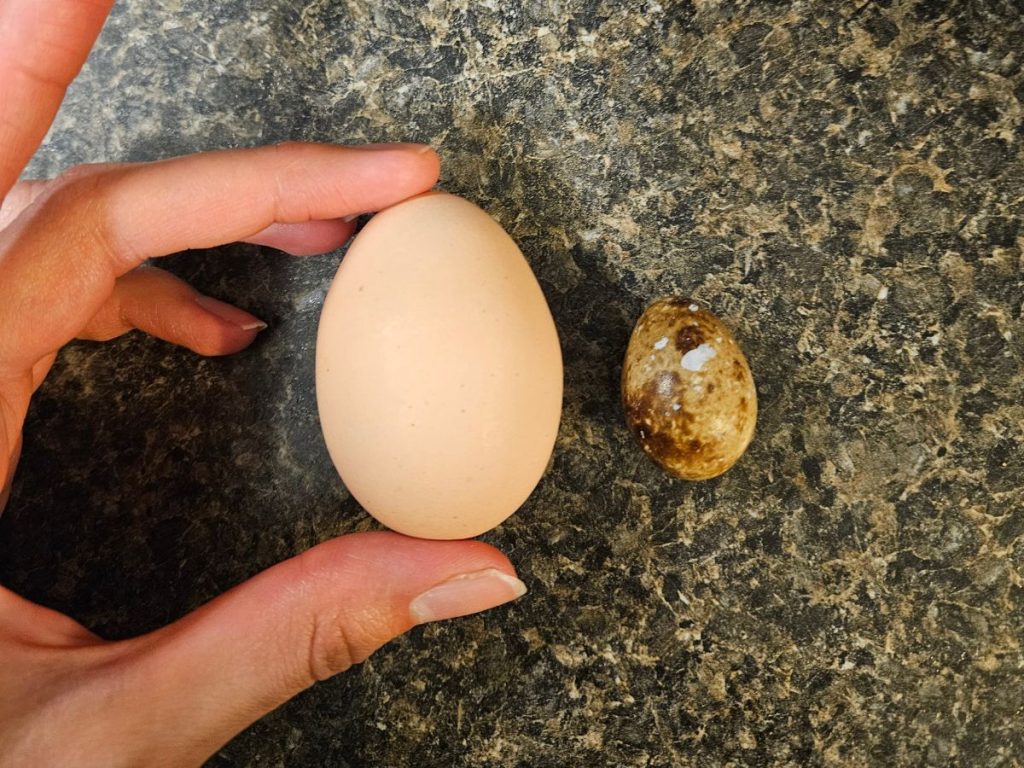
The most obvious difference between a chicken egg and a quail egg is their size.
Average quail eggs can be about 1.5 inches (27 to 35 millimeters) long and weigh about 9 to 13 grams.
An average chicken egg is about 2.5 inches (63 millimeters) long and weighs about 70 grams (2 ounces). A chicken egg equals about 3 to 4 quail eggs. In baking, that’s an important substitution to remember!
The same rule applies to everyday cooking. However, quail egg yolks tend to be richer, so the end result consistency might not be the same. We talk more about that later in the blog post.
The small quail eggs are not to be confused with a chicken’s fairy egg. The size of a chicken egg is standard, 2.5 inches long.
Shell Color
Despite popular belief, a chicken’s eggshell color isn’t determined by what they eat. It’s determined by what breed of chicken they are.
For example, Leghorn chickens traditionally lay white eggs, Ameraucana chickens traditionally lay speckled brown eggs, and Buff Orpington chickens traditionally lay light brown eggs.
Quail eggs are small and are usually covered in dark brown spots. Even though that’s the common look, even quail eggs can be blue, black, white, and tan.
Protein Content
This isn’t a blog centered around health advice or dietary advice. Keep that in mind as you read this section of this blog post.
Quail need a very high protein feed to support their rapid growth and development. By eight weeks old, they are considered full-grown! To support that, it’s recommended that they be fed a game bird feed or a 30 percent protein feed. Whatever that looks like from your local farm store.
Chickens, on the other hand, take much longer to mature. Up to four to six months! Laying hens aren’t usually laying consistently until they are 6 months old. Chickens take longer to reach mature size, and take longer to grow mature feathers.
A key reason chickens need lower-protein feed (mature birds can hover around 16 to 18 percent, depending on development and purpose) is that high protein stresses their digestive systems. This can cause a myriad of health issues.
I say all of that to say – you are what you eat! So by understanding that quail eat a higher protein content in their feed, the meat and eggs you can harvest from a quail will also be high in protein.
We see that this particularly rings true for quail meat. It’s estimated that a 3-ounce serving of quail has 21 grams of protein in it. But the equivalent serving of chicken has 19 to 20 grams of protein. Quail is also suspected to have few calories per serving.
More About Quail
When I began researching the potential health benefits surrounding quail and their byproducts, I found some claims that are worth talking more about.
First, the tiny egg they produce is loaded with flavor. In fact, they are traditionally used as a gourmet item because of the slightly richer taste.
This is because of the higher yolk-to-white ratio. The egg white, or albumen, is the clear, viscous liquid surrounding the yolk. A quail egg has less albumen than a chicken egg does. Because of this, the egg is considered richer and tastier. It isn’t necessarily because of the animal or the feed it eats.
Second, I have seen a few claims that quail eggs are an appropriate substitute for chicken eggs for those with a chicken egg allergy.
If you have a chicken egg allergy, I strongly urge you to pursue this with the help of your doctor. The average quail egg isn’t recommended as a replacement for a chicken egg in the case of an allergy. And it’s important that allergies be handled by a professional on a case-by-case basis.
I also think it’s important to note that while quail eggs might be used to avoid an allergy, on their own, they aren’t an adequate protein source. A diverse diet can give you what you need across the board, from protein to vitamins to minerals. Remember to enjoy a little of all that God has created!
Finally, availability was a topic of discussion.
Most people seem to think that you can’t find quail eggs in local grocery stores, but that’s not the case!
A quick Google search not only showed me nationwide chains that carry quail eggs, but also multiple options. In my area, the closest grocery store that might carry pickled quail eggs is about 40 minutes away. The closest grocery store that might carry fresh eggs is about 1.5 hours away.
This doesn’t count the farm stands aplenty that populate my area.
If you are interested in trying quail eggs or transitioning to locally bought food, do some research! Ask around your farmers’ markets. There are so many connections you could build and avenues you could pursue to start eating locally.


Cooking Tips
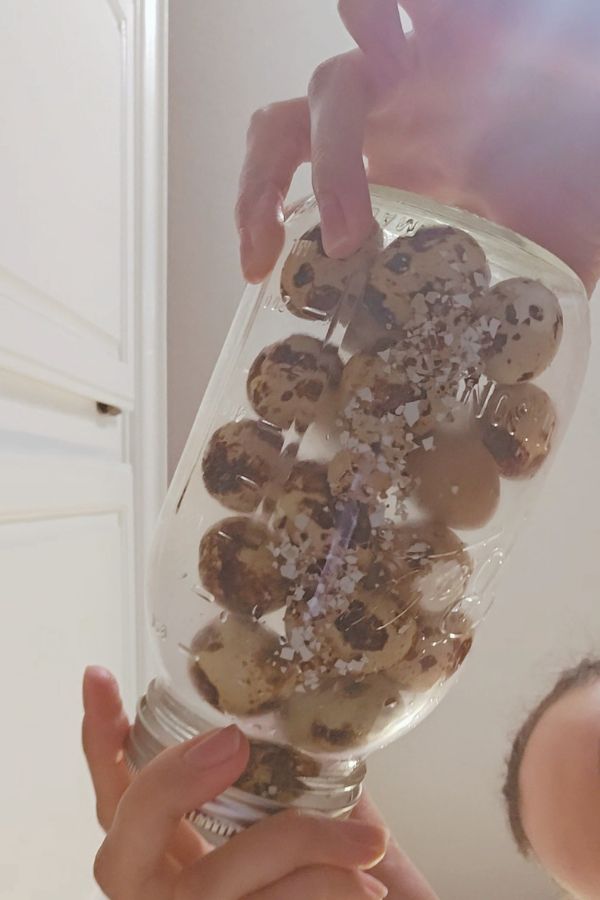
Hard-boiled quail eggs don’t take nearly as much time to cook, but they take a bit of skill to peel. We have found that putting the eggs into a mason jar with a bit of water and shaking vigorously helps crack the eggs. At that point, we can peel the eggs without a problem.
Where we would normally crack a chicken egg, we have found using a pair of scissors dedicated to cracking quail eggs is so simple. If you try to crack the quail egg like you would a chicken egg, you might not be able to break through the membrane of the egg. Or you can break through the membrane but rupture the yolk in the process.
The process is simpler than it sounds. I have a whole blog post on making hard-boiled quail eggs!
Thinking of Raising Your Own Quail?
I share our journey with our own backyard homestead in hopes it will encourage you to grow food, too! Search “quail” on this blog to find more backyard homesteading content.
For even more content, follow me on Pinterest and Instagram!
Leave a Reply