
Freshly milled flour isn’t as hard to make as some people think. Let’s break down the process so you can know how to mill your own flour at home, too!
I have been milling my own flour at home for a year now. And when I tell my friends I make my own flour, I usually get a reaction along the lines of, “You do what, now?”
Making homemade flour isn’t as crazy as you think!
Fresh-milled flour is convenient, nutrient-dense, and fresh. I did have a learning curve to get to where I am, though.
If you want to avoid some of my mistakes and truly get a step ahead in making your own food, keep reading!
This post contains affiliate links. That means when you click on a link and make a purchase, I make a commission at no extra cost to you. As an Amazon Affiliate, I make an income from qualifying purchases. For more information about my disclosure and privacy policy, visit this page.
Pin this post for later!
Table of Contents
How to Grind Your Own Flour at Home
What About Flours from Different Grains?
Health Benefits of Freshly Ground Flour
BONUS – Quick Tips for Whole Grain Baking
How to Grind Your Own Flour at Home
While grinding flour at home is a simple process, the path to get here took a few steps. Making flour at home isn’t a new idea, but it is one that has fallen to the wayside with the rise of modern appliances and factory-produced food.
I recommend starting with the right equipment. You may see hacks like using a food processor or a coffee grinder. Because these machines aren’t intended to grind grains, you will end up with a coarser product. This can affect the rise of your baked goods and the overall eating experience.
I opted for a grain mill. I wrote an unsponsored review of the one I use in this blog post.
We purchased an electric mill over a grain mill attachment for my stand mixer because the electric mill has the ability to produce a finer flour.
If price point is a hang-up for you in this journey, opt for steel milling heads over stone milling heads. Stone milling heads can easily double the price of your grain mill. However, they are the longest-standing way to mill flour, and they create a premium product.
Once you’ve selected your grain mill, it’s time to choose your wheat berries. In my area, grocery stores don’t carry wheat berries. So I had to find bulk food co-ops and bulk food bin stores that carry wheat berries.
My bulk food co-op delivers locally. I also shop from a family-owned bin store a town over and a commercial chain bin store about 45 minutes from my house. Your options are closer than you think! Take a drive around your county and see what’s available to you.
If you aren’t sure about where to start, try Azure Standard (the co-op I was talking about) or health food stores in your area.
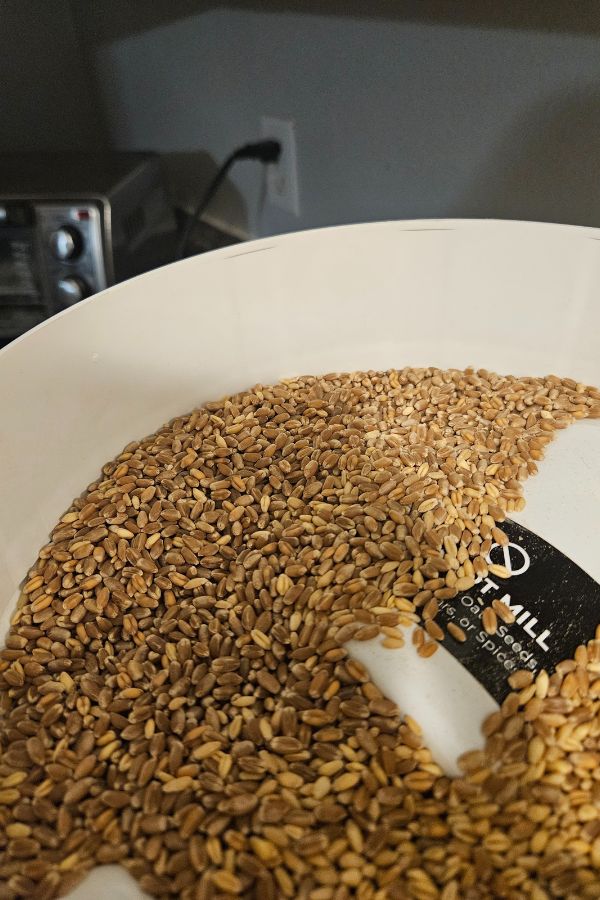
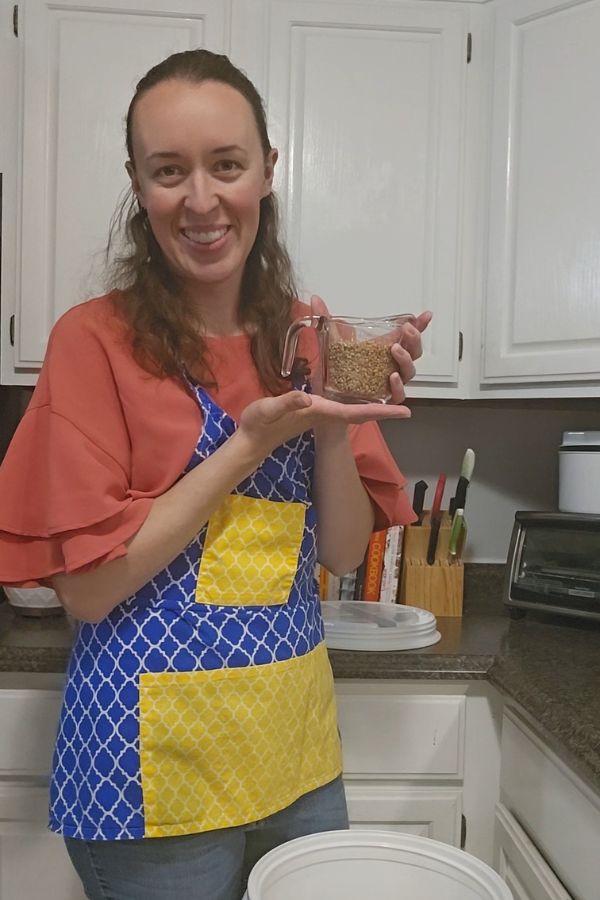
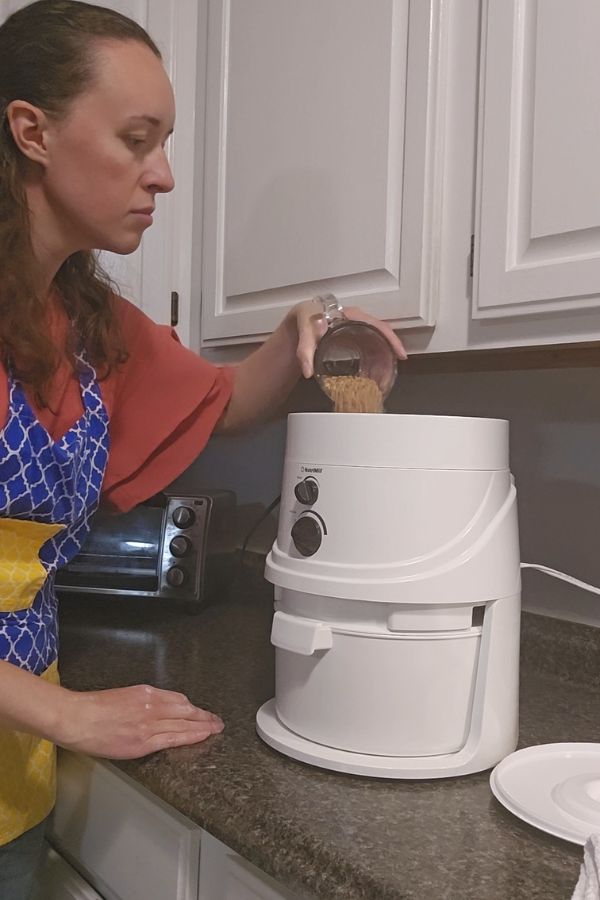
The type of wheat you work with matters. And as you continue down the rabbit hole of making your food from scratch, you’ll find that things like protein content will even impact the quality of your baked goods!
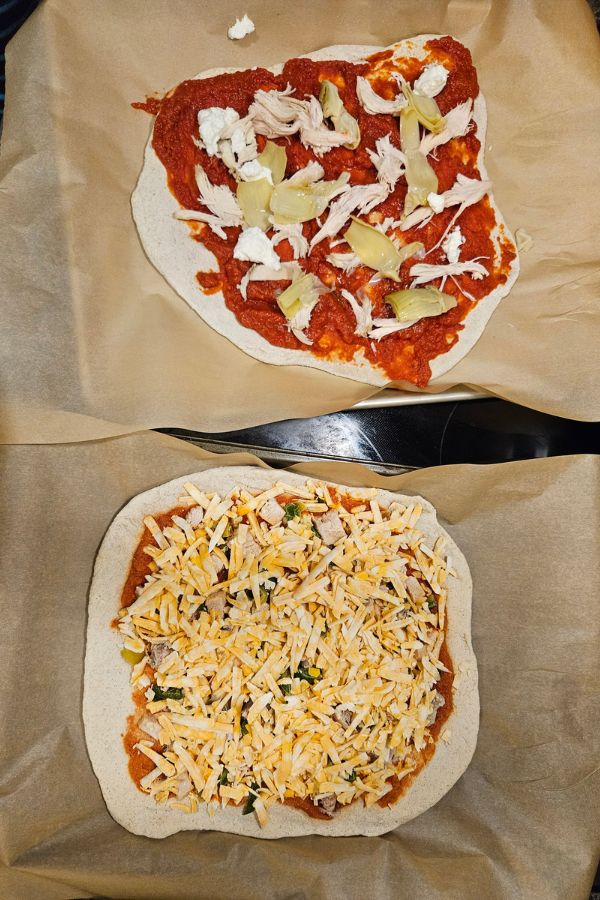
I work exclusively with hard red wheat berries and soft white wheat berries. Hard red wheat berries, per my research, are great for yeasty products. This is the flour I use for pizzas and yeast sandwich breads.
Soft white wheat berries, per my research, are great for baked goods. This is the flour I use for cookies, pancakes, cakes, and more.
I have found that a cup of wheat berries yields a cup of flour. But other estimates say a cup of wheat berries can yield up to a cup and a half of flour.
The wheat berry is made up of three parts: the bran, the endosperm, and the germ. The bran has so many nutrients, but some members of my family don’t like the texture it provides to our flour products.
If you don’t like the texture of bran, you can sift it out of your flour. I use a 40 mesh sieve I found on Amazon.
When your flour has been ground and sifted, it’s best to store it in an airtight container in your refrigerator. Especially if you keep the bran in your flour.
Freshly milled flour contains oils from the wheat berry that haven’t been processed out of the flour. Freshly milled flour also doesn’t contain any stabilizers or preservatives. Because it’s so fresh, it can spoil quickly at room temperature.
By storing the flour in the fridge, you slow the spoiling process, thus prolonging the life of your flour (if it lasts that long! I grind grains about once per week).
That’s how you make homemade flour!
What About Flours from Different Grains?
Grinding your own flour means you are in control of the flavor, nutritional content, and texture of your flour. You can create gluten-free mixes or create an ancient grain blend. The flexibility and creative freedom you have to customize your food to your family’s needs is truly inspiring.
Dig in and begin researching! I recommend these books to get started.
It’s important to note that the flour you mill may depend on the type of mill you have.
Be sure to check the operating manual and verify the wheat varieties you can mill. Some mills may be able to process ancient grains like amaranth, buckwheat, millet, and quinoa.
It is important to note that some grain mills may not be able to process things like seeds and coffee beans. Don’t ruin your grain mill – check the manual before you mill!
How to Store Your Bulk Grains
I don’t purchase whole wheat berries in small quantities because I find I can get lower prices on bulk food purchases.
However, that means I’m purchasing wheat berries in 25 to 50 pound quantities!
I store my wheat berries in plastic, food-safe, 5-gallon buckets I purchased from my local hardware store. I use twist-top lids, also called Gamma Seal lids, because they are easier to frequently access than the plastic, snap-on lids usually found with 5-gallon buckets.
I store my freshly-ground flour in half-gallon, glass mason jars in my refrigerator.
All of these resources can be found at local stores in your area. If you are struggling to find what you need, try tapping into the local sources you may have in your area. They can help you find what you need!
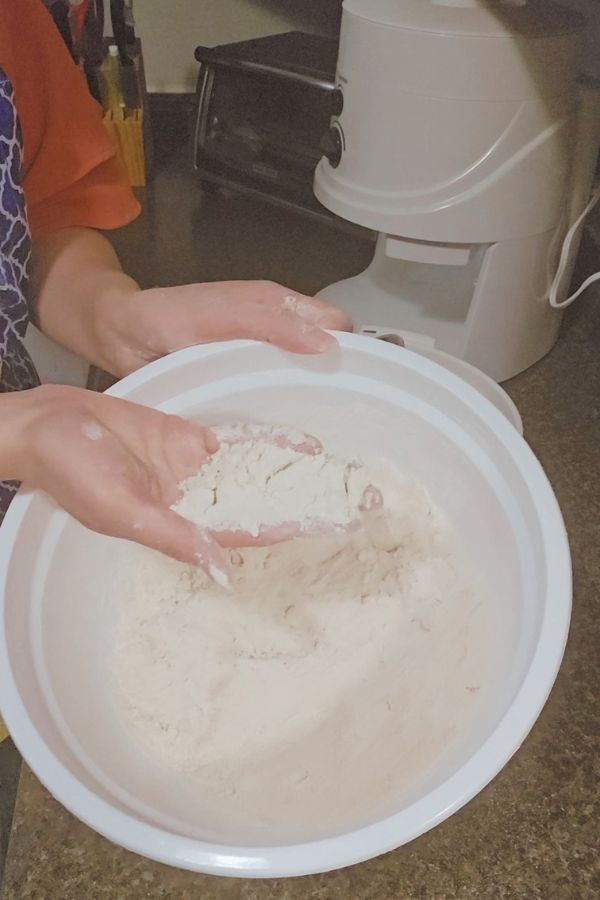
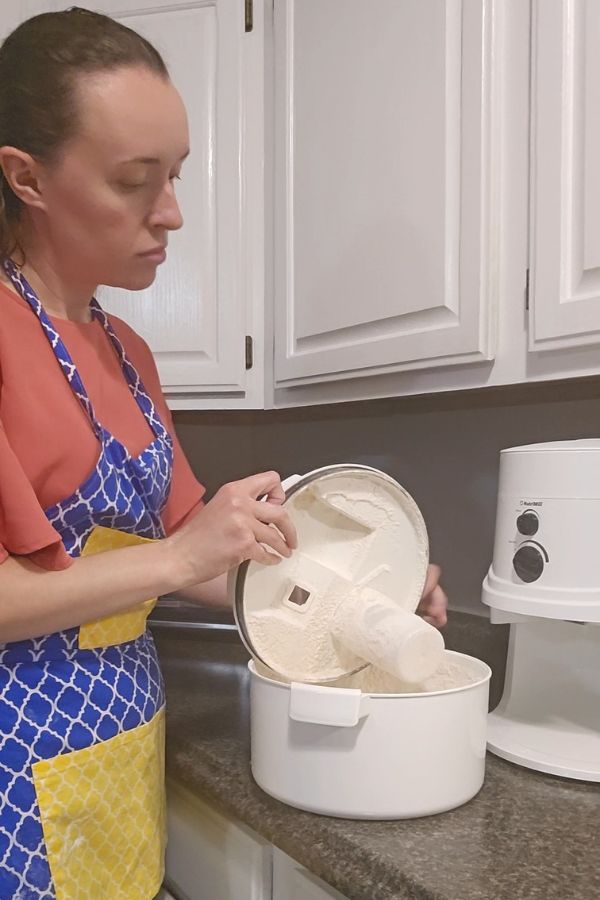
I store my grain mill in a cabinet that’s dedicated to kitchen appliances. Although you could store your grain mill on your countertop for daily use. This may depend on the type of grain mill you have.
Some estimates say the shelf life of whole wheat berries can be up to three years, so long as your airtight container is stored at a reasonable temperature. If you store wheat berries in a mylar bag with oxygen absorbers, some say the shelf life can be as long as 25 years!
Your wheat berry supplier, storage solutions, and even your home’s humidity level can all impact how long your wheat berries store for. Take that into consideration and plan for your family and environment!
Health Benefits of Freshly Ground Flour
I am not a doctor. I am not a nutritionist. This advice is just that – advice. It’s not intended to cure, treat, or prevent anything you might have going on in your life. Because this is something you’re reading from someone who doesn’t have a nutritionist license, I encourage you to do your own research and make the decision that’s best for your family.
We prefer to make and keep our food as fresh as possible. Yes, we still buy produce and some meat from the grocery store. But the end goal of working with fresh food is what we’re working toward.
Flour is no exception.
Store-bought flour is usually not whole wheat flour. And I’m not talking about the dark brown bread you find at the store. I’m talking about the bran that gets sifted out during the creation process.
The bran is removed to create a shelf-stable flour that is fluffy and light in color. But while bran is removed, preservatives and other additives are included. Again, this helps make a shelf-stable product. But for an ingredient-conscious family, we want to get rid of anything we don’t actually have to eat.
Finally, store-bought flour usually has fewer nutrients because quite a few are removed during the preservation process. This is why freshly milled flour goes rancid more quickly. The oils from the bran and the germ are not removed, making the flour more susceptible to spoilage.
While it has fewer nutrients, store-bought flour does stay shelf stable for as long as 8 months.
Wheat bran, while gritty and usually associated with people who need fiber, is incredibly nutritious. It gives us what we need for fiber intake, and some say it can decrease your risk for certain types of cancer.
While I can sing the praises of freshly ground flour all day long, there are people who should avoid gluten-based flours. If you have celiac disease, a wheat allergy, or a gluten sensitivity, you should avoid flours with gluten.
Remember, this is where making your own flour can be beneficial. You can create oat, rice, or buckwheat flour at home.
We mill our flour at home because I have questions about the nutritional value of commercial flour. But your reasons for making flour at home may be different.
Pin this post for later!
BONUS – Quick Tips for Whole Grain Baking
When I made my first loaf of homemade bread with freshly milled flour, I was thrilled about learning a new skill. However, it didn’t come together quite like the sandwich bread I was used to!
Freshly milled flour often takes more moisture than store-bought flour. Be sure to account for that when you’re working with freshly-milled flour! The ratio I have found is that you need to add up to a quarter cup more liquid per recipe for every 1 cup of flour you use.
If you can’t seem to get the moisture ratio for your flour correct, try letting your mixture sit for 10 minutes or so before baking. I have found that waffle batter, muffin batter, and even cookie batter will absorb liquid better if given the time to absorb it.
Since you can manually change the settings of your grain mill, you can opt for a finer grind in your grain mill. If you do have fine flour, you may need to fluff it so it doesn’t create a dense baked good.
Finally, fresh flour may have a nutty flavor you aren’t used to. Don’t let that stop you from adding your favorite spices to baked goods!
Related Blog Posts
Nutrimill Classic Grain Mill Review
Sign up for my email newsletter!
I share a behind-the-scenes look at how I use what I write about in my email newsletter.
Leave a Reply